
Sperm storage/banking is the process of collecting, freezing and storing sperm (sperm cryopreservation). The stored sperm is intended to be thawed and used in the future for procedures such as intrauterine insemination (IUI) or in vitro fertilization (IVF). Some reasons to freeze sperm:
1. If you are undergoing cancer treatment- chemotherapy or radiation therapy tends to significantly affect /reduce sperm count and therefore there might be very few sperm or no sperm left in the ejaculate.
2. Surgery such as the removal of the testicles for testicular cancer means sperm can no longer be produced.
3. Age: Sperm quality diminishes with age, so you may choose to freeze sperm if you are getting older and want to preserve fertility.
3. Certain medical procedures or conditions may warrant you to choose to have a vasectomy but keep the option of having children in the future. Some medications, such as testosterone therapy or sickle cell therapy, can affect fertility.
4. Occupation: People with high-risk jobs, such as those in the military, can freeze sperm to make it available.
Sperm collection in preparation for freezing
The sperm freezing process involves several steps.
1. A person undergoes an infectious disease screening (STI male panel) to make sure there are no sexually transmitted diseases. This usually involves a simple blood test.
2. The patient provides a semen sample. Masturbation at a fertility clinic is the most common way to provide the sample, but in some cases, a sample can be produced at home and delivered to a lab within 1 hour.
Important to note that the specimen must go into a cup that’s approved by the lab and remain as close as possible to body temperature. The sample must not contain any unauthorized lubricants/moisturizers as this can affect sample integrity.
Sometimes a surgical procedure is necessary to extract sperm from testicular tissue. This might be the case for those who have already had a vasectomy or undergone cancer treatment. Individuals with infertility (a very low sperm count or no sperm in the semen) might also need surgery to extract sperm.
At sperm freezing:
Andrologists place prepared sperm ( washed and separated) into a special freezing solution in small vials. Sometimes the raw (un washed ) is preferred for freezing. The vials go into storage freezers that contain liquid nitrogen and has to stay frozen at a constant temperature of -196 degrees Celsius.
When ready for use, the sperm is carefully thawed in the lab until it reaches room temperature. “After thawing, it’s analyzed to make sure there are motile, active sperm remaining. Sadly, in many cases, one-half to two-thirds of sperm may not survive the freeze-thaw cycle but the ones that do survive may be at an advantage from a fertility standpoint.
Egg freezing
You will need to use fertility drugs to make you ovulate so that you’ll produce multiple eggs for retrieval and subsequent freezing.
Egg freezing, also known as mature oocyte cryopreservation, is a method used to save women’s ability to get pregnant in the future. The eggs retrieved from the ovaries are frozen unfertilized and stored for later use. A frozen egg can be thawed, combined with sperm in a lab and implanted in your uterus using a process called in vitro fertilization.
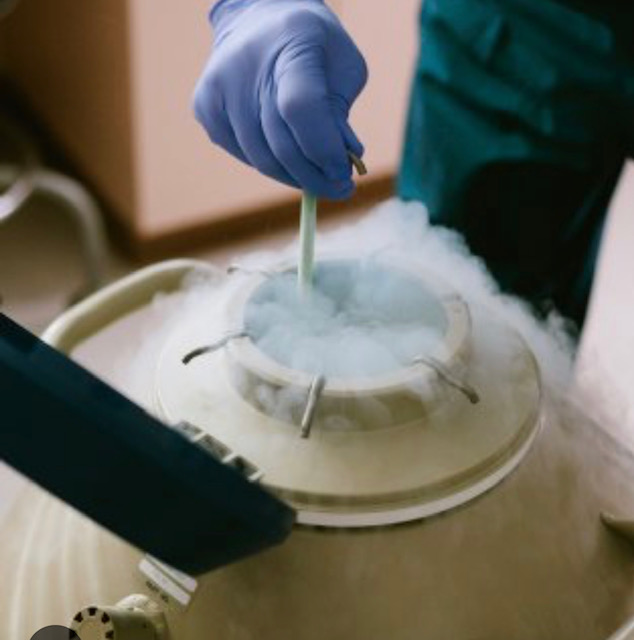
Egg freezing is a fertility preservation option if you’re not ready to become pregnant now but want to try to make sure you can get pregnant later (social freezing). Egg freezing doesn’t require sperm because the eggs aren’t fertilized before they’re frozen.
Reason why you might consider egg freezing:
- You have a condition or circumstance that can affect your fertility
- You need treatment for cancer or another illness that can affect your ability to get pregnant. Certain medical treatments — such as radiation or chemotherapy — can harm your fertility
- You’re undergoing in vitro fertilization. When undergoing in vitro fertilization, some people prefer egg freezing to embryo freezing for religious or ethical reasons.
- You wish to preserve younger eggs now for future use. Freezing eggs at a younger age might help you get pregnant when you’re ready.
Egg freezing has multiple steps — ovarian stimulation, egg retrieval and freezing.
Ovarian stimulation: Uses synthetic hormones to stimulate your ovaries to produce multiple eggs — rather than the single egg that typically develops monthly. Medications that might be needed include:
- Medications for ovarian stimulation. You might inject medication such as follitropin alfa or beta (Follistim AQ, Gonal-f) or menotropins (Menopur).
- Medications to prevent premature ovulation.Your doctor might prescribe an injectable gonadotropin-releasing hormone agonist such as leuproline acetate (Lupron Depot) or a gonadotropin-releasing hormone antagonist such as cetrorelix (Cetrotide).
While undergoing this treatment, your clinical team will medically monitor you. You will have blood tests to measure your response to ovarian-stimulation medications (Estrogen levels typically increase as follicles develop, and progesterone levels remain low until after ovulation).
Follow-up visits will also include having vaginal ultrasound — a procedure that uses sound waves to create an image of the inside of your ovaries — to monitor the development of fluid-filled sacs where eggs mature (follicles).
When the follicles are ready for egg retrieval — generally after 10 to 14 days — an injection of human chorionic gonadotropin (Pregnyl, Ovidrel) or another medication can help the eggs mature.
Egg retrieval
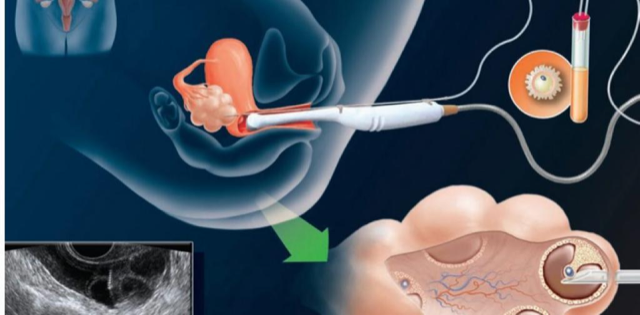
Egg retrieval is done under sedation, typically in your doctor’s office or a clinic. A common approach is transvaginal ultrasound aspiration, during which an ultrasound probe is inserted into your vagina to identify the follicles.
A needle is then guided through the vagina and into a follicle. A suction device connected to the needle is used to remove the egg from the follicle. Multiple eggs can be removed, and studies show that the more eggs retrieved— up to 15 per cycle — the better the chances of birth.
After egg retrieval, you might have cramping. Feelings of fullness or pressure might continue for weeks because your ovaries remain enlarged.